Sign up for our community

Stay connected with Paraty Agency, discover our new initiatives and receive valuable advice.
Paraty Label's action is based on a long-term requirement, at the service of the artists and the projects it defends. Nourished by a strong classical music culture and open to varied aesthetics, the label deploys a vision based on quality, uniqueness and international influence, with the support of global distribution provided by Universal.
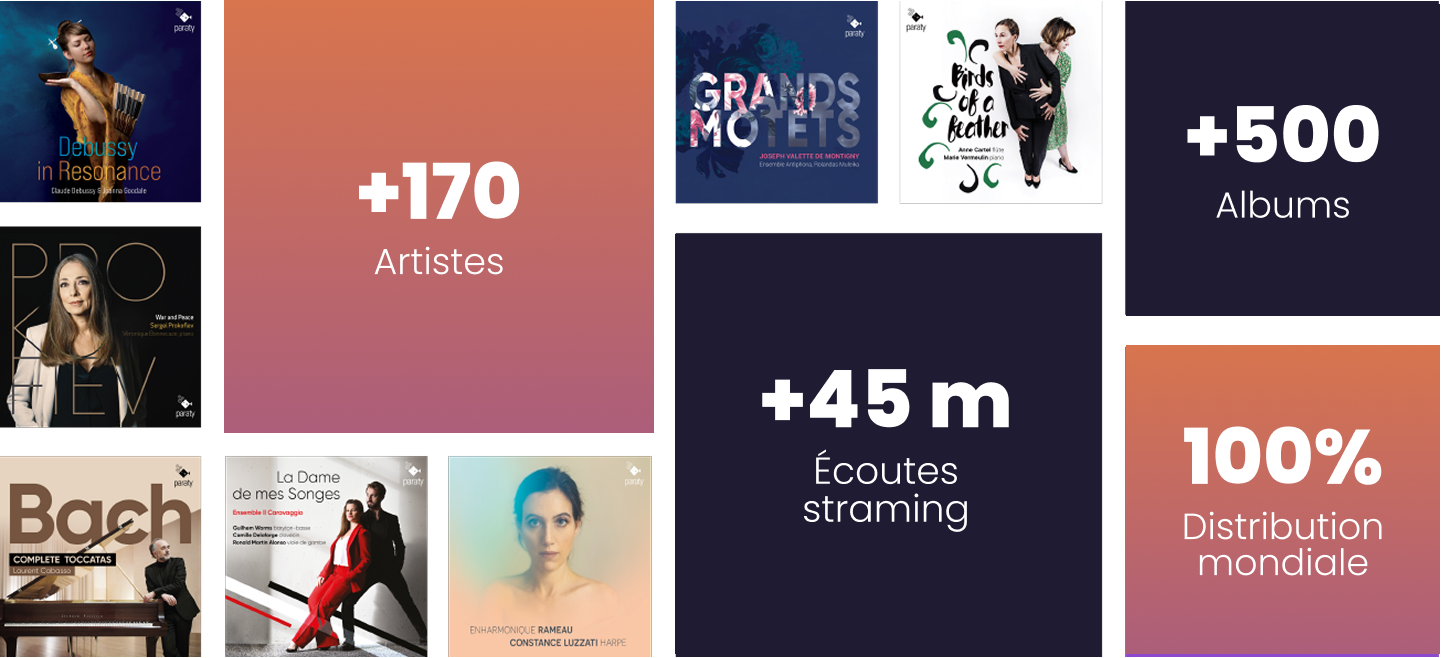
+
180
Artists
+
45
M
Listen to streaming
+
500
Albums
100
%
Global distribution

Novelty

Digital platforms

Murmures

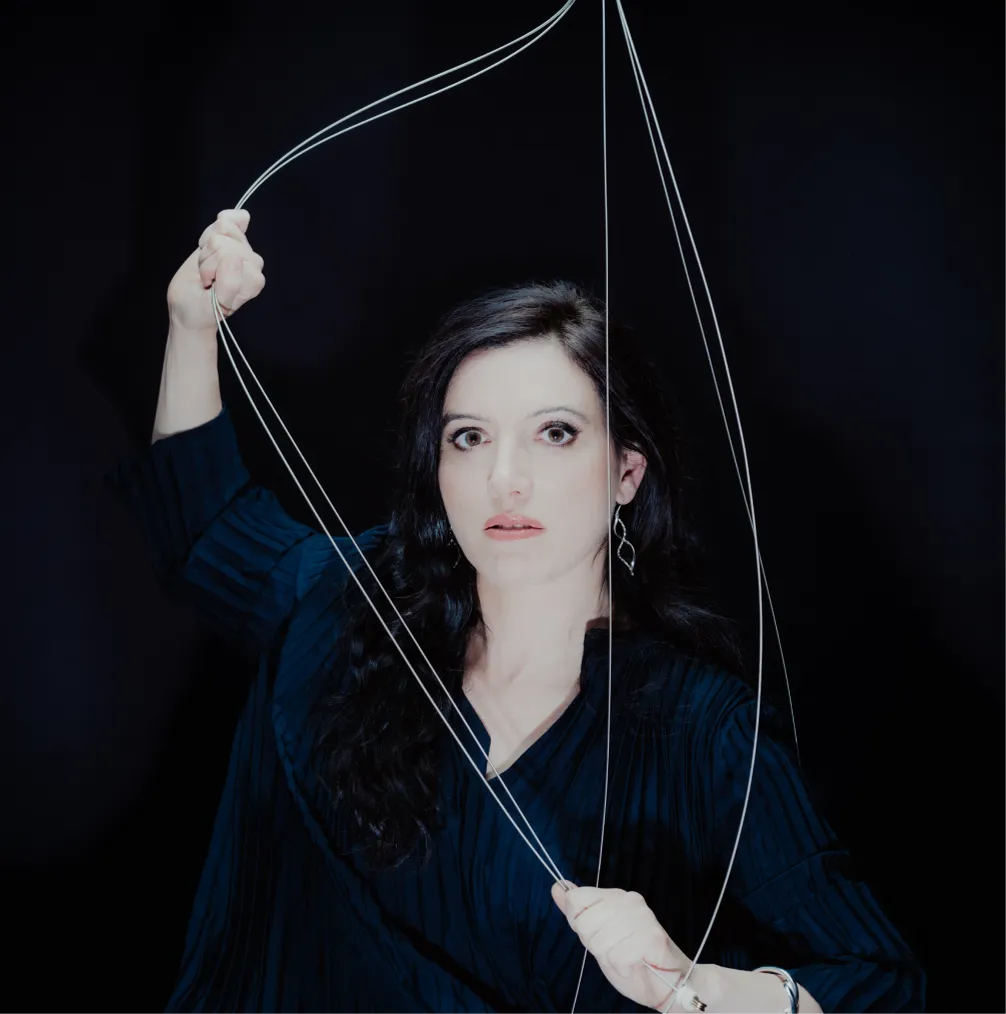
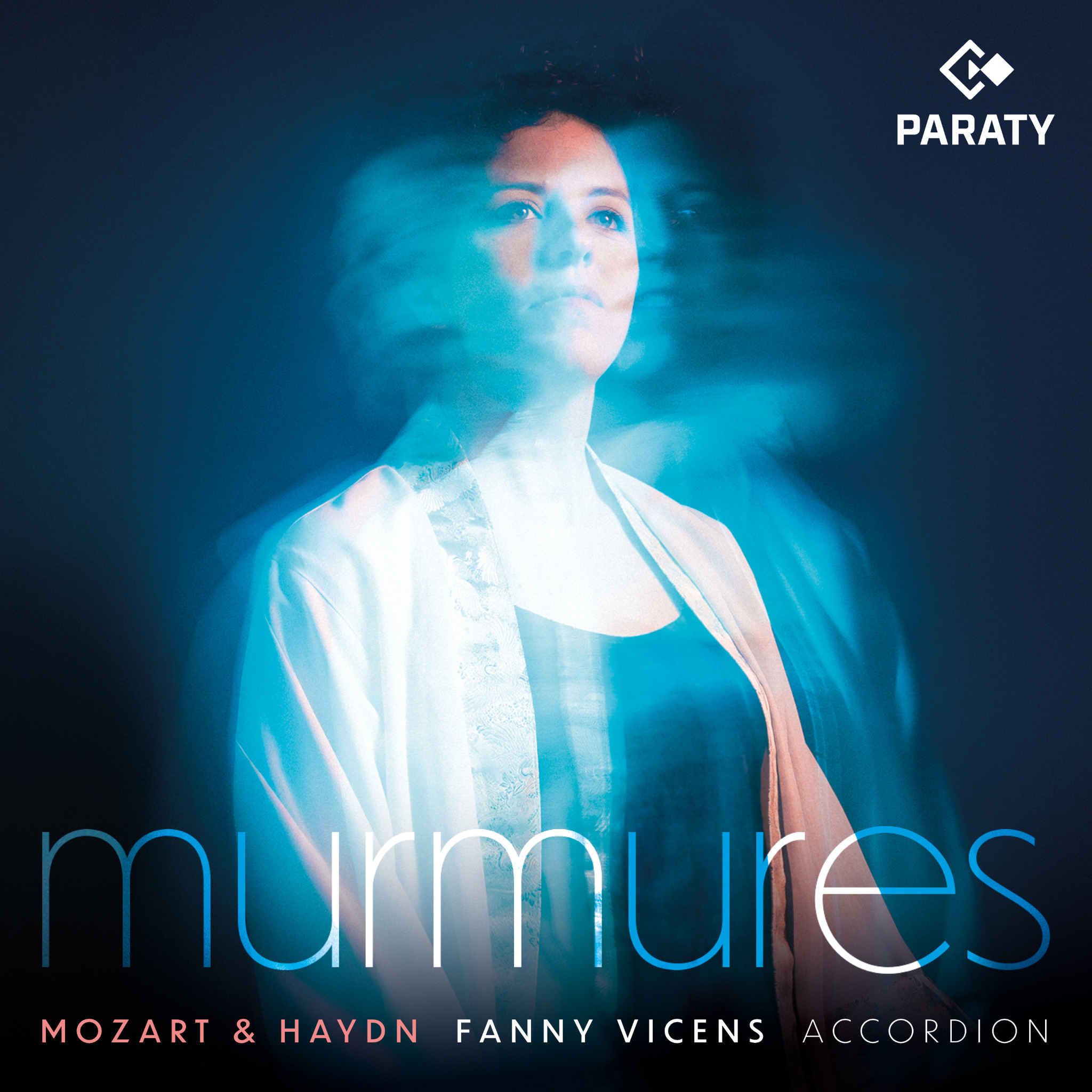
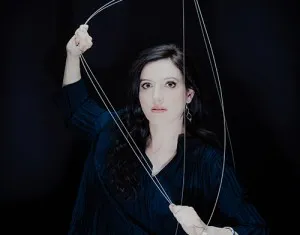
With Murmures, Fanny Vicens dedicates a double album to Mozart and Haydn, performed on the accordion. Following her recording of the Goldberg Variations for Paraty, she continues her exploration of the keyboard repertoire through an interpretation that is neither a mere transposition nor a surprising novelty, but a carefully constructed interpretive approach.

The project originated in 2023, during a period of returning to musical roots. Mozart and Haydn emerge as two composers linked to Fanny Vicens' training, but also as two figures united by Vienna, by their friendship, and by a shared attention to form, discourse, and the inner movement of music. The program juxtaposes their works in a two-and-a-half-hour journey.

The accordion is considered a full-fledged interpretive instrument. Fanny Vicens draws on its unique resources — breath, sound continuity, articulation, and precision of sound layers — to present these Mozart and Haydn pieces in a new light, without altering their balance. Whispers thus shifts the question of the instrument's legitimacy towards that of musical interpretation itself.
Digital platforms

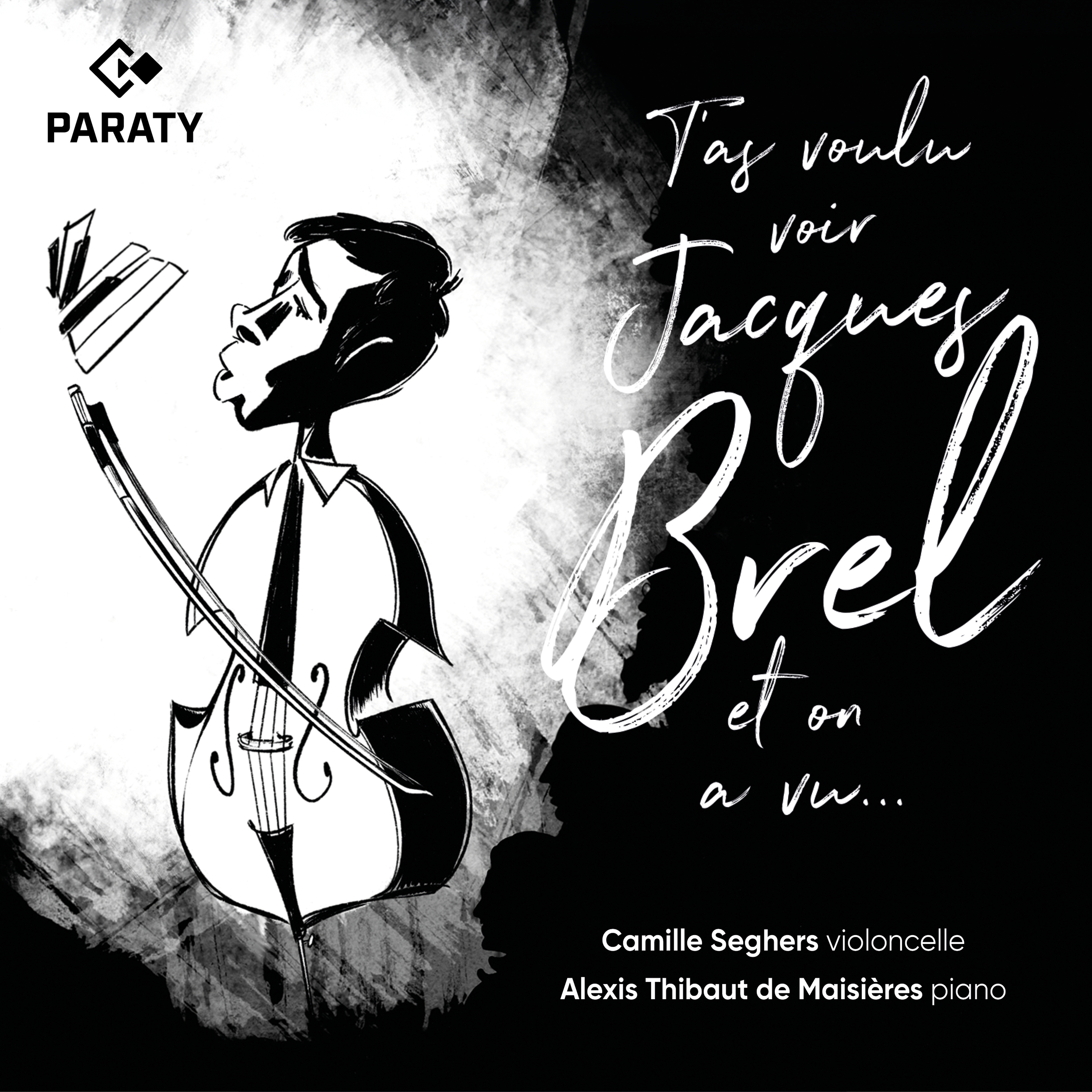
You wanted to see Jacques Brel and we saw...

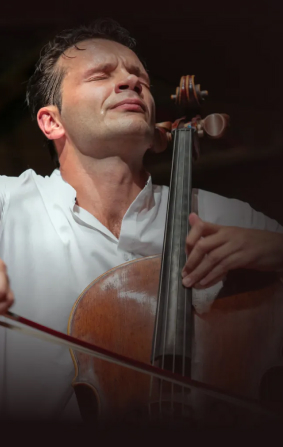
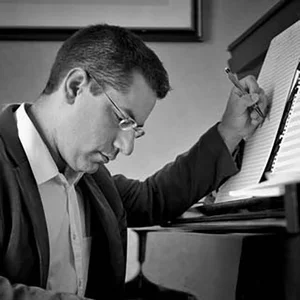
With You wanted to see Jacques Brel and we saw…, cellist Camille Seghers and pianist-arranger Alexis Thibaut de Maisières bring Jacques Brel's songs into the realm of chamber music. Thirteen iconic songs converse with major works from the classical repertoire, in arrangements that reveal the deep connections between song, musical theater, cabaret, and concert.

Born from a stage intuition, the project was built around a game of mirrors: recognizing Brel without the words being spoken, and hearing echoes of Ravel, Schubert, Offenbach, Chopin, Shostakovich, or Rimsky-Korsakov behind his melodies. Far from a mere scholarly nod, each juxtaposition opens up another listening space, where the song gains new depth and classical music rediscovers the direct impulse of the popular voice.

In this setup, the cello takes the place of the voice: it doesn't seek to imitate Brel, but rather to convey the vocal line differently, through timbre, inflection, tension, or restraint. The piano, for its part, becomes a place of transformation, allowing the songs to circulate between several musical worlds. Camille Seghers and Alexis Thibaut de Maisières thus offer a sensitive and profoundly musical interpretation of a repertoire that has become heritage

Digital platforms

Augmented Tangos, Fleurs Noires

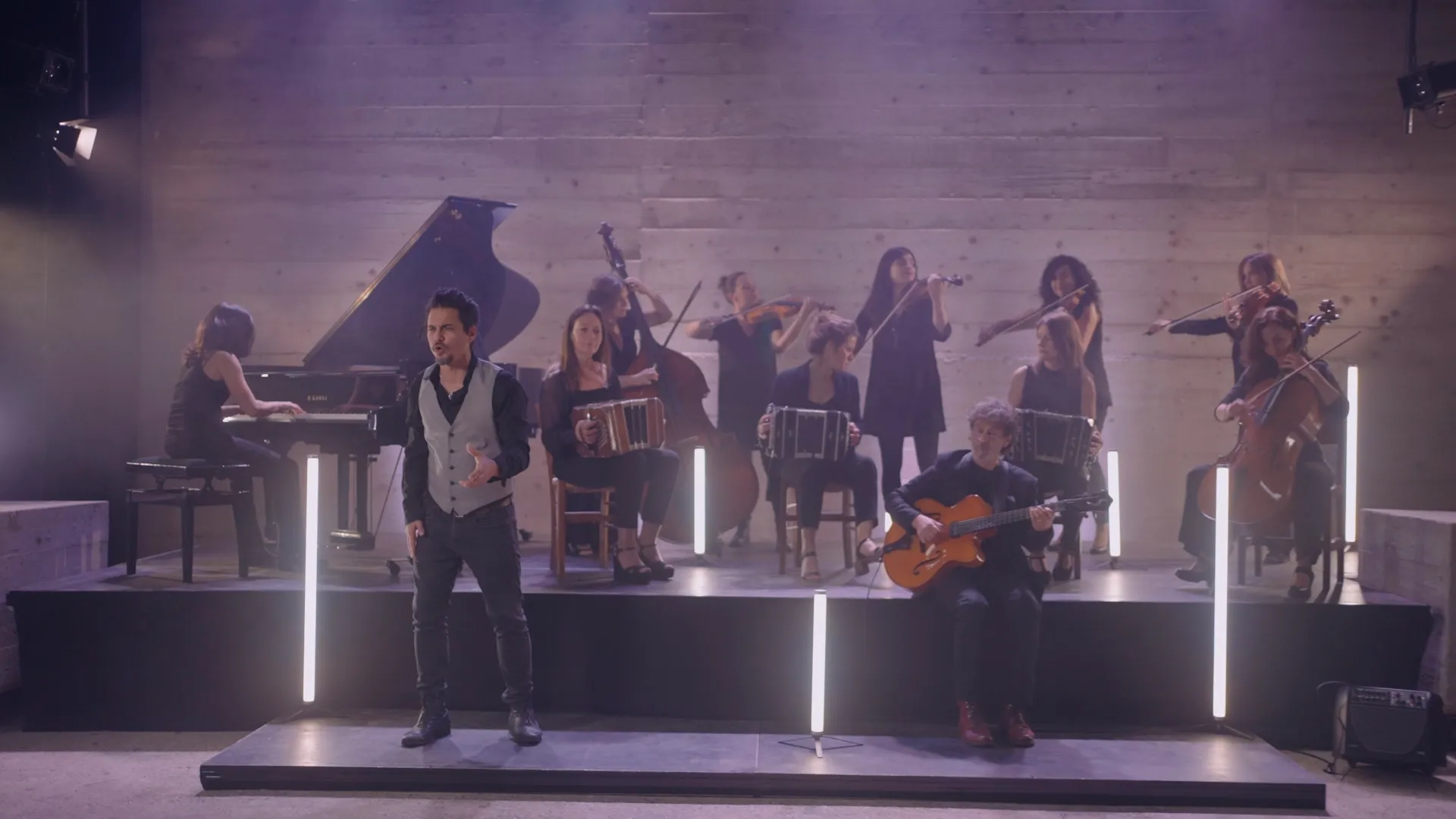
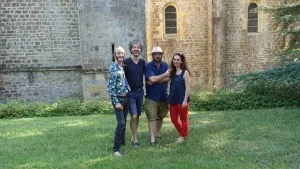
With Augmented Tangos, Fleurs Noires continues over twenty years of research into contemporary tango, led by a Franco-Argentine all-female ensemble founded in 2003 by Veronica Votti, Luciana Jatuff, and Andrea Marsili. The ensemble has established itself between Paris and Buenos Aires with a unique approach to the genre, rooted in Argentine memory and open to contemporary compositions.  

Built around the compositions of Andrea Marsili, pianist, composer, doctor of musicology, and specialist in tango codes, the album explores the connections between traditional orchestra, electronics, instrumental timbres, and sound spatialization. The pieces combine the acoustic essence of tango with a pre-recorded virtual counterpart, creating a play of mirrors between instrumental gesture, contemporary writing, and sonic extension.  

The album also features several guests — Tomás Gubitsch, Mandy Lerouge, Aureliano Marin, and Vanesa García — who enrich its vocal, rhythmic, and sonic architecture. Through this project, Fleurs Noires asserts a vision of tango as a space for creation, transmission, and cross-cultural blending, where heritage is not preserved as a fixed form but transformed into living material.

Digital platforms

Bach - Organ work, Wim Winters

An absolute summit of the organ repertoire, Johann Sebastian Bach's work dedicated to the king instrument is a masterful synthesis of the major European schools. True to his roots while speaking a universal language, Bach extends and transcends the heritage of German, French and Italian masters, from Pachelbel to Buxtehude, from Nicolas de Grigny to Frescobaldi. Through toccatas, fugues, chorals and trio sonatas, he brings organ art to a level of achievement where formal rigor and poetic freedom never cease to dialogue.

This program brings together some of the most emblematic pages of this monumental corpus: the Toccata and Fugue in F major BWV 540, the Concerto in D minor BWV 596 after Vivaldi, several chorals from Orgelbüchlein and the major collections of Leipzig, the Sixth Trio Sonata BWV 530, and the Prelude and Fugue in B minor BWV 544. Bach deploys an exceptionally rich composition, combining contrapuntal science, the expressiveness of the Lutheran chorale, concerting inspiration and a keen sense of instrumental color. The organ becomes in turn orchestra, meditative voice, liturgical space and field for formal experimentation.

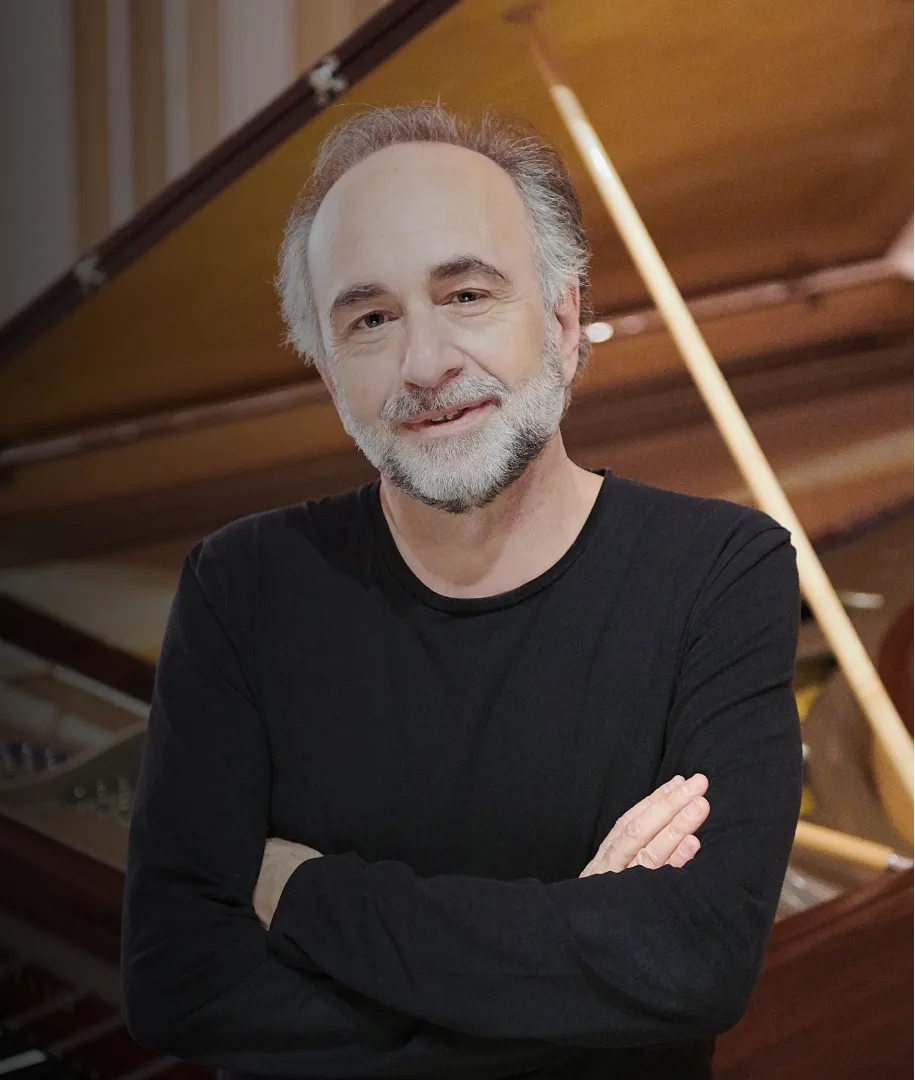
This interpretation was given to the Belgian organist Wim Winters, on the organ of the Reformed Church of the Shield in Strasbourg, built in 2007 by Dominique Thomas based on 18th century Thuringian instruments. Thanks to its balance between gravity and flexibility, this modern organ of historical inspiration is particularly suited to the world of Bach. Wim Winters deploys a reading that is both architectural and lively, highlighting the clarity of the lines, the rhythmic vitality and the spiritual depth of this music, in a constant dialogue between tradition and interpretative freedom.

Digital platforms

Matinas do Natal by Marcos Portugal

This interpretation brings together the Turicum Ensemble, directed by Luiz Alves da Silva and Mathias Weibel.

Composed for the Royal Chapel in Rio de Janeiro and sung on Christmas night 1811, the Matinas do Natal by Marcos Portugal occupy a unique place in the musical history of Portugal and Brazil. A major figure in Portuguese-Brazilian musical life, Portugal was both a composer of internationally successful operas and a prolific creator of sacred music. These Matins, written shortly after the establishment of the Portuguese court in Rio, bear witness to a sumptuous, festive and deeply theatrical liturgical art, designed to magnify the celebration of the mystery of the Nativity.

Built in three nocturnal events, each composed of responsoires, the Matinas do Natal are part of an elaborate concerto style, in which soloists, chorus and orchestra alternate. The instrumentation, remarkable for the absence of violins, highlights clarinets, bassoons, cellos and organ, creating a pastoral and luminous palette. Marcos Portugal deploys a constant invention, reconciling structural unity and expressive variety, in order to maintain the listener's attention during a ceremony that can last several hours. The music combines religious fervour, contemplative impulses, dance rhythms and passages of assumed humor, a reflection of a liturgical practice open to secular influences.

Digital platforms

Portrait of Iris, François Couperin

This program is devoted to Viola da Gamba Suites and harpsichord pieces by François Couperin, brought together under the evocative title of Portrait of Iris. At the end of his life, withdrawn from the world and marked by illness, Couperin delivered music of singular intensity, where dance, character and meditation mingle in a deeply personal language. Long considered lost, Violin pieces with cipherical bass published in 1728 reveal a discreet tribute to the viola da gamba and, perhaps, a farewell to the golden age of the instrument.

The two Viola Suites, one built on traditional French dances, the other composed of characterful pieces, interact here with a vast choice of harpsichord pieces and with the Fourteenth Concert of Tastes combined. Couperin's writing, less idiomatic than that of Marin Marais but with remarkable expressive freedom, is distinguished by its sense of story, its singular decorations and an interior poetry that transcends form. Through these works, Couperin does not so much paint an instrument as an inner world, where music becomes language, gesture and imagination.

This sound portrait brings together Emmanuelle Guigues and Sylvia Abramowicz on viola da gamba, Bruno Procopio on harpsichord and Rémi Cassaigne on theorbo and baroque guitar. Together, they breathe new life into this refined universe using historical instruments, creating a dialogue between tones and styles in a spirit of freedom and depth. This interpretation offers a sensitive journey through Couperin's art, where dance, gravity and reverie are balanced in a vision that is both intimate and theatrical.

Fanny Vicens, Whispers, Paraty, Mozart, Haydn, accordion, accordion, classical accordion, double album, Goldberg Variations, Bach, keyboard repertoire, keyboard, classical music, chamber music, Vienna, historically informed performance, sonatas, piano, transcription, classical album, Paraty Productions, Universal Music, keyboard repertoire, classical music, Joseph Haydn, Wolfgang Amadeus Mozart

Murmures

With Murmures, Fanny Vicens dedicates a double album to Mozart and Haydn, performed on the accordion. Following her recording of the Goldberg Variations for Paraty, she continues her exploration of the keyboard repertoire through an interpretation that is neither a mere transposition nor a surprising novelty, but a carefully constructed interpretive approach.

The project originated in 2023, during a period of returning to musical roots. Mozart and Haydn emerge as two composers linked to Fanny Vicens' training, but also as two figures united by Vienna, by their friendship, and by a shared attention to form, discourse, and the inner movement of music. The program juxtaposes their works in a two-and-a-half-hour journey.

The accordion is considered a full-fledged interpretive instrument. Fanny Vicens draws on its unique resources — breath, sound continuity, articulation, and precision of sound layers — to present these Mozart and Haydn pieces in a new light, without altering their balance. Whispers thus shifts the question of the instrument's legitimacy towards that of musical interpretation itself.

Digital platforms

Jacques Brel, Brel, You wanted to see Jacques Brel and we saw, Camille Seghers, Alexis Thibaut de Maisières, cello, piano, chamber music, French song, song, classical, arrangements, transcription, Paraty, new album, Ravel, Schubert, Offenbach, Chopin, Shostakovich, Rimsky-Korsakov, Ne me quitte pas, Vesoul, Marieke, Bruxelles, Les Flamandes, Les Désespérés, Les Cœurs tendres, Gérard Jouannest, Yvonne Lefébure, cabaret, salon, concert, musical heritage, Brel album, cello and piano, French classical music, crossover, song and classical.

You wanted to see Jacques Brel and we saw...

With You wanted to see Jacques Brel and we saw…, cellist Camille Seghers and pianist-arranger Alexis Thibaut de Maisières bring Jacques Brel's songs into the realm of chamber music. Thirteen iconic songs converse with major works from the classical repertoire, in arrangements that reveal the deep connections between song, musical theater, cabaret, and concert.

Born from a stage intuition, the project was built around a game of mirrors: recognizing Brel without the words being spoken, and hearing echoes of Ravel, Schubert, Offenbach, Chopin, Shostakovich, or Rimsky-Korsakov behind his melodies. Far from a mere scholarly nod, each juxtaposition opens up another listening space, where the song gains new depth and classical music rediscovers the direct impulse of the popular voice.

In this setup, the cello takes the place of the voice: it doesn't seek to imitate Brel, but rather to convey the vocal line differently, through timbre, inflection, tension, or restraint. The piano, for its part, becomes a place of transformation, allowing the songs to circulate between several musical worlds. Camille Seghers and Alexis Thibaut de Maisières thus offer a sensitive and profoundly musical interpretation of a repertoire that has become heritage

Digital platforms

Fleurs Noires, Augmented Tangos, contemporary tango, Argentine tango, Franco-Argentine tango, all-female orchestra, tango orchestra, tango and electronics, immersive music, contemporary music, Andrea Marsili, Veronica Votti, Luciana Jatuff, Tomás Gubitsch, Tomas Gubitsch, Mandy Lerouge, Aureliano Marin, Vanesa García, Vanesa Garcia, Omar Marsili, Tangos en Aleph, Minino Garay, Paraty, Paraty Productions, Studio de l’Ermitage, Buenos Aires, Paris, bandoneon, piano, violin, cello, double bass, vocals, contemporary creation, musical blending, Argentina, France

Augmented Tangos, Fleurs Noires

With Augmented Tangos, Fleurs Noires continues over twenty years of research into contemporary tango, led by a Franco-Argentine all-female ensemble founded in 2003 by Veronica Votti, Luciana Jatuff, and Andrea Marsili. The ensemble has established itself between Paris and Buenos Aires with a unique approach to the genre, rooted in Argentine memory and open to contemporary compositions.  

Built around the compositions of Andrea Marsili, pianist, composer, doctor of musicology, and specialist in tango codes, the album explores the connections between traditional orchestra, electronics, instrumental timbres, and sound spatialization. The pieces combine the acoustic essence of tango with a pre-recorded virtual counterpart, creating a play of mirrors between instrumental gesture, contemporary writing, and sonic extension.  

The album also features several guests — Tomás Gubitsch, Mandy Lerouge, Aureliano Marin, and Vanesa García — who enrich its vocal, rhythmic, and sonic architecture. Through this project, Fleurs Noires asserts a vision of tango as a space for creation, transmission, and cross-cultural blending, where heritage is not preserved as a fixed form but transformed into living material.

Digital platforms

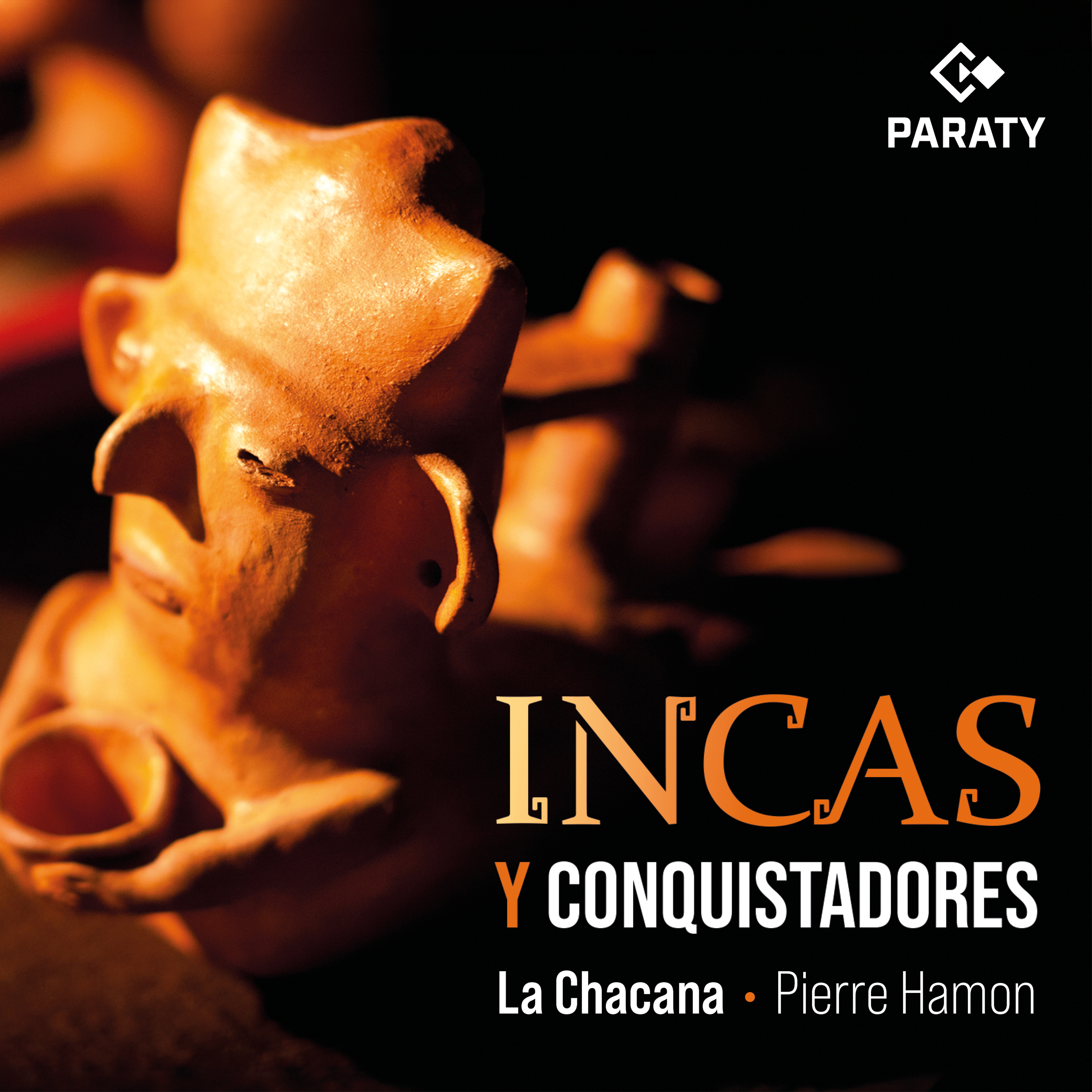
Madre Selva, Diana Baroni, Ronald Martin Alonso, Ronald Martin Alonso, Ensemble Vedado, Vedado, ancient music, folk traditions, Latin America, singing, traverso, viola da gamba, Keyvan Chemirani, Abraham Mansfarroll, Abraham Mansfarroll, Abraham Mansfarroll, Abraham Mansfarroll, Abraham Mansfarroll, Tunde Jegede, Tunde Jegede, Tunde Jegede, Rafael Güel Frías, Rafael Güel Frías, Pacha Mama, Tlaloc, Water, Earth, Earth, Earth, Air, Nature, Nature, Earth, Nature, Abraham Mansfarroll, Abraham Mansfarroll, Abraham Mansfarroll, Abraham Mansfarroll, Tunde Jegede, Tunde Jegede, Tunde Jegede, Huatl, Quechua, oral traditions, Vézelay, City of the Voice, Paraty

Madre Selva, Diana Baroni, Ronald Martin Alonso & Ensemble Vedado

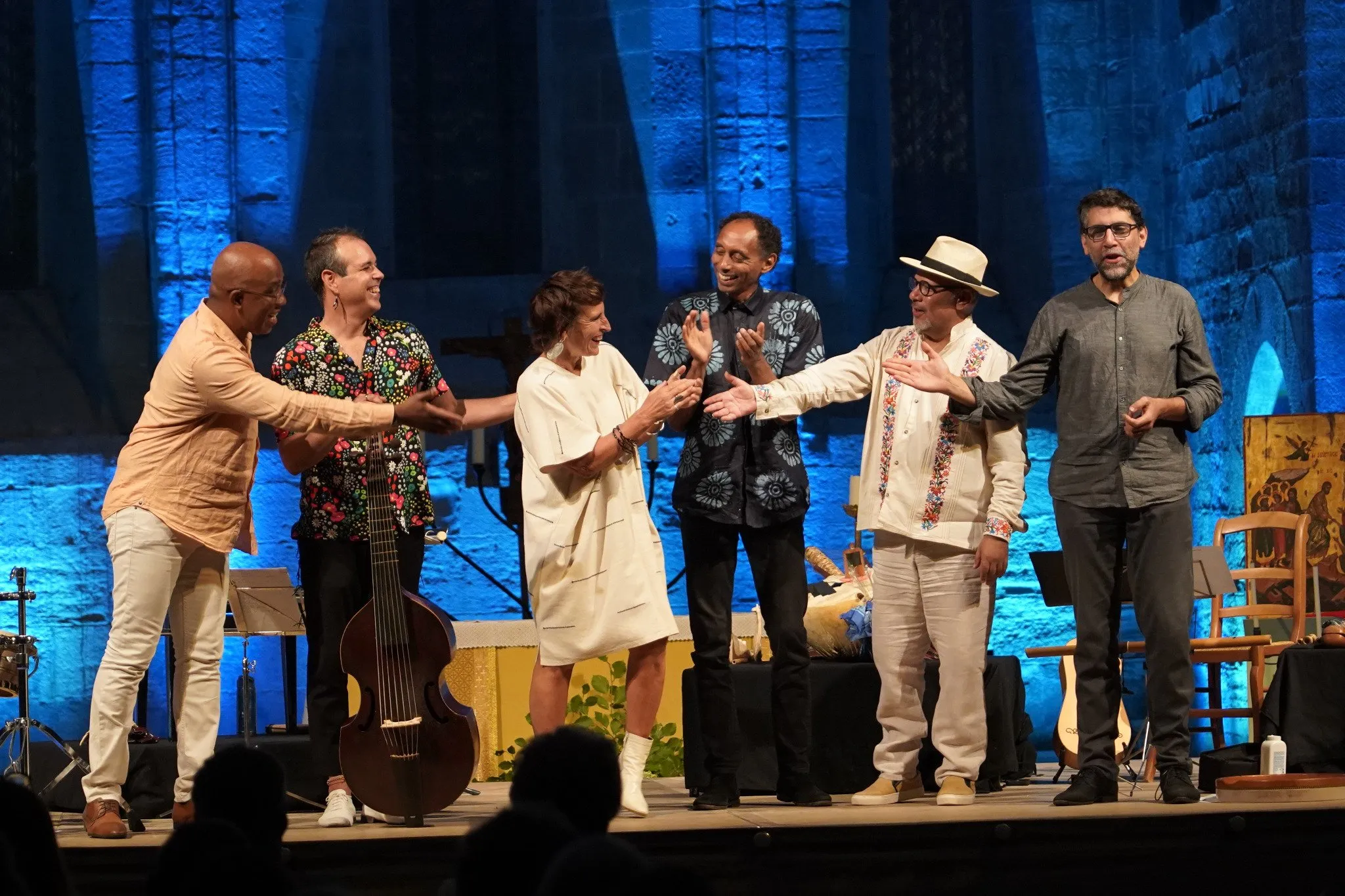
Madre Selva is an ode to nature and to Mother Earth, created by Diana Baroni and Ronald Martin Alonso as an extension of their desire to connect memory, territories and transmitted traditions. Designed as a tribute, an offering, and a call, the program evokes the forces of life — water, earth, fire, and air — as well as the human responsibility to preserve what protects and balances the world.

Designed as a musical journey, the album brings together a repertoire rooted in the ancestral heritage of Latin America, from the Andes to Mexico, from the Caribbean to the Bolivian plateaus. Songs in indigenous languages, oral traditions, poetry, poetry, rhythms and ancient sources dialogue in a common artistic space where memories meet across borders.

With Diana Baroni, Ronald Martin Alonso and the Vedado Ensemble, Madre Selva deploys a singular sonic alchemy, nourished by the percussions of Keyvan Chemirani and Abraham Mansfarroll, the kora of Tunde Jegede, as well as the jarana and the pre-Columbian aerophones of Rafael Güel Frías. Between meditation, celebration and invention, this album offers a deeply living and poetic musical experience.

Digital platforms

XASAX, XASAX plays Leoš Janáček, Leoš Janáček, Leoš Janáček, Janacek, Leoš Janáček saxophone quartet transcriptions, saxophone quartet transcriptions, saxophone quartet transcriptions, saxophone quartet transcriptions, transcriptions for saxophone quartet, Pierre-Stéphane Meugé, Janacek, Janacek, Leoš Janáček saxophone quartet transcriptions, saxophone quartet transcriptions, saxophone quartet transcriptions, transcriptions for saxophone quartet, transcriptions for saxophone quartet, Pierre-Stéphane Meugé, Marcus Weiss, Marcus Weiss, Marcus Weiss, Jean-Michel Goury, Serge Bertocchi, Four Moravian Male-Voice Choruses, Four Moravian Male-Voice Choruses Songs, On an Overgrown Path, On an Overgrown Path Book I, On an Overgrown Path Book I, On an Overgrown Path Book I, On an Overgrown Path Book I, Intimate Sketches, Intimes, Glagolitic Mass, Postludium, Postlude, Moravian, Moravian songs, Moravian songs, Moravian songs, Moravian songs, Moravian songs, Moravian songs, Moravian songs, Moravian songs, Moravian songs, Moravian songs, Moravian songs, Moravian songs, Moravian songs, Moravian songs, Moravian songs, Moravian songs, Moravian songs, Moravian Folk Paraty, Paraty 2025019

XASAX plays Leoš Janáček

Album devoted to, XASAX plays Leoš Janáček offers a rich and contrasting journey through the world of the Czech composer through original transcriptions for saxophone quartet.

Led by the strong personalities of the XASAX ensemble (Pierre-Stéphane Meugé, Marcus Weiss, Jean-Michel Goury, Serge Bertocchi), the program goes through several emblematic cycles: Moravian songs, piano works (On a bushy path), late sketches (Intimes) and excerpts from the Glagolitic mass.

Between vocal writing, folklore and modernity, these pieces reveal all the uniqueness of Janáček's language, here enhanced by the warmth and sound plasticity of saxophones, in a constant dialogue between tradition and reinvention.

Digital platforms

Les Mondes Baroques, Role-playing, Anne-Charlotte Dupas cello, Xavier Marquis bassoon, chalumeau, Paolo Corsi harpsichord, Bor Zuljan archiluth, Louis Delignon percussion, Massimo Pinca double bass, Massimo Pinca double bass, Julie Pinca double bass, Julie Roset soprano, Julie Roset soprano, Julie Roset soprano, Julie Roset soprano, Joseph Bodin de Boismortar Bass Sonatas Op. 26 and Op. 50, Jean-Philippe Rameau Les Sauvages, Antoine Lisette Quit La Plaine, Antoine Lisette Quit La Plaine, Joseph Cassanea de Mondonville La Curieuse, Louis-François Joseph Patouart Sonata Op. 2, Dances from Cyprus Blainville, French Baroque music, 18th century, Paraty

Roleplay, Baroque Worlds

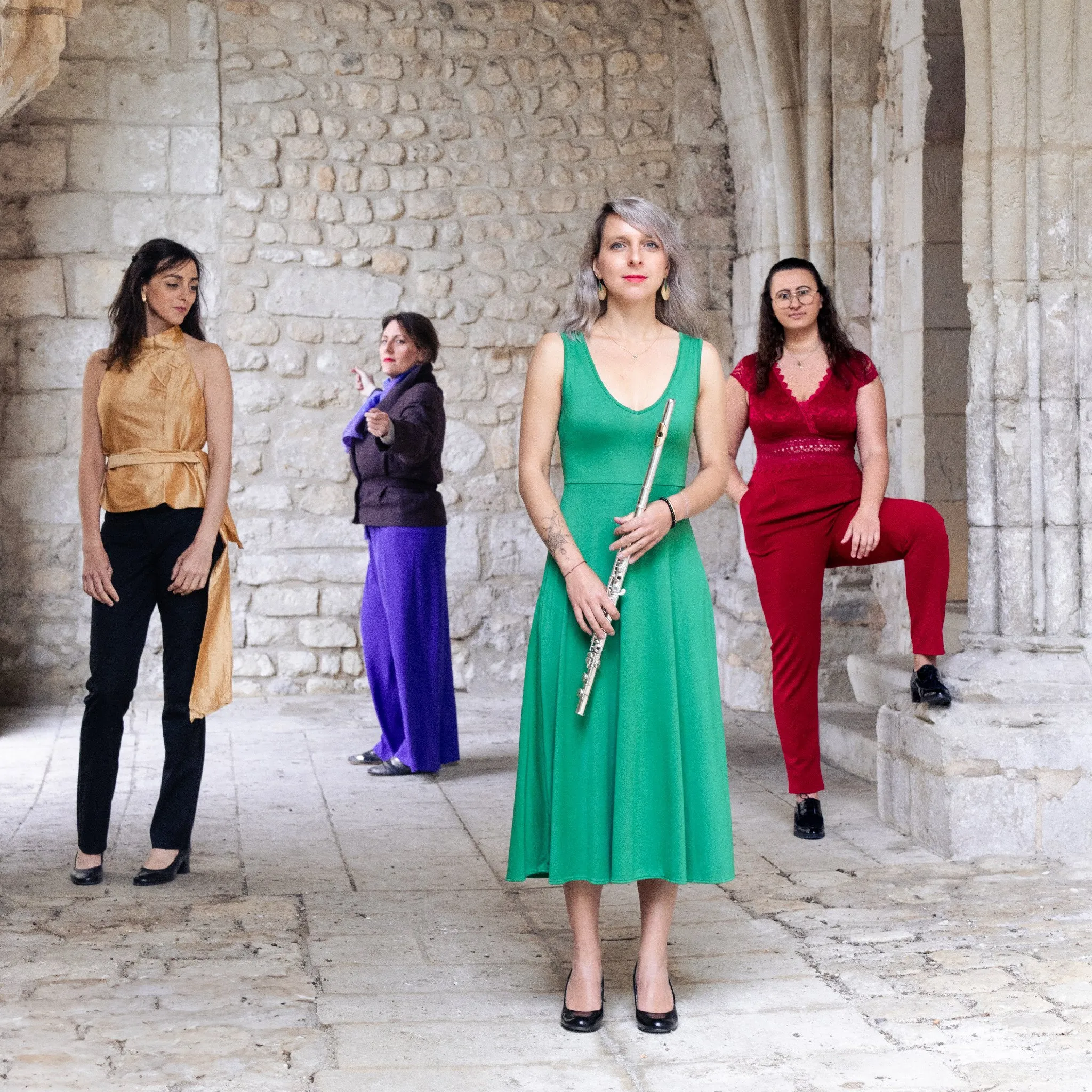
With Role Play, the ensemble Les Mondes Baroques offers a singular journey through French music from the middle of the 18th century, placed under the sign of miscegenation and curiosity. At the heart of this program are the bass sonatas by Joseph Bodin de Boismortier, whose hybrid writing combines French taste and Italian taste, scholarly forms and popular inspirations. These works dialogue with well-known tunes, dances and songs from a variety of sources, brought together as pieces from a musical cabinet of curiosities.

Around these sonatas are Les Sauvages by Jean-Philippe Rameau, Lisette Quit la Plaine attributed to Antoine Albanese, La Curieuse associated with Jean-Joseph Cassanéa de Mondonville, as well as pieces by Louis-François Joseph Patouart and Danses de Chiffre brought back by Charles-Henri de Blainville. Some pages, sung in 18th century Haitian Creole or inspired by extra-European traditions, bear witness to the circulation of styles, stories and imaginaries during the Baroque period. Percussion, integrated in a dramaturgical way, reinforces this narrative and ritual dimension.

Led by Anne-Charlotte Dupas and Xavier Marquis, Jeu de Rules brings together a cast of rare colors: cello, bassoon, chalumeau, harpsichord, archiluth, percussion and double bass, to which is added the voice of Julie Roset. The ensemble Les Mondes Baroques affirms here a living and embodied vision of the repertoire, where the interpretation is based as much on historical research as on the freedom of play and the imaginary, making French Baroque music resonate in all its expressive diversity.

Digital platforms

Fanny Vicens, Whispers, Paraty, Mozart, Haydn, accordion, accordion, classical accordion, double album, Goldberg Variations, Bach, keyboard repertoire, keyboard, classical music, chamber music, Vienna, historically informed performance, sonatas, piano, transcription, classical album, Paraty Productions, Universal Music, keyboard repertoire, classical music, Joseph Haydn, Wolfgang Amadeus Mozart

Murmures

With Murmures, Fanny Vicens dedicates a double album to Mozart and Haydn, performed on the accordion. Following her recording of the Goldberg Variations for Paraty, she continues her exploration of the keyboard repertoire through an interpretation that is neither a mere transposition nor a surprising novelty, but a carefully constructed interpretive approach.

The project originated in 2023, during a period of returning to musical roots. Mozart and Haydn emerge as two composers linked to Fanny Vicens' training, but also as two figures united by Vienna, by their friendship, and by a shared attention to form, discourse, and the inner movement of music. The program juxtaposes their works in a two-and-a-half-hour journey.

The accordion is considered a full-fledged interpretive instrument. Fanny Vicens draws on its unique resources — breath, sound continuity, articulation, and precision of sound layers — to present these Mozart and Haydn pieces in a new light, without altering their balance. Whispers thus shifts the question of the instrument's legitimacy towards that of musical interpretation itself.

Plataformes digitales

Jacques Brel, Brel, You wanted to see Jacques Brel and we saw, Camille Seghers, Alexis Thibaut de Maisières, cello, piano, chamber music, French song, song, classical, arrangements, transcription, Paraty, new album, Ravel, Schubert, Offenbach, Chopin, Shostakovich, Rimsky-Korsakov, Ne me quitte pas, Vesoul, Marieke, Bruxelles, Les Flamandes, Les Désespérés, Les Cœurs tendres, Gérard Jouannest, Yvonne Lefébure, cabaret, salon, concert, musical heritage, Brel album, cello and piano, French classical music, crossover, song and classical.

You wanted to see Jacques Brel and we saw...

With You wanted to see Jacques Brel and we saw…, cellist Camille Seghers and pianist-arranger Alexis Thibaut de Maisières bring Jacques Brel's songs into the realm of chamber music. Thirteen iconic songs converse with major works from the classical repertoire, in arrangements that reveal the deep connections between song, musical theater, cabaret, and concert.

Born from a stage intuition, the project was built around a game of mirrors: recognizing Brel without the words being spoken, and hearing echoes of Ravel, Schubert, Offenbach, Chopin, Shostakovich, or Rimsky-Korsakov behind his melodies. Far from a mere scholarly nod, each juxtaposition opens up another listening space, where the song gains new depth and classical music rediscovers the direct impulse of the popular voice.

In this setup, the cello takes the place of the voice: it doesn't seek to imitate Brel, but rather to convey the vocal line differently, through timbre, inflection, tension, or restraint. The piano, for its part, becomes a place of transformation, allowing the songs to circulate between several musical worlds. Camille Seghers and Alexis Thibaut de Maisières thus offer a sensitive and profoundly musical interpretation of a repertoire that has become heritage

Plataformes digitales

Fleurs Noires, Augmented Tangos, contemporary tango, Argentine tango, Franco-Argentine tango, all-female orchestra, tango orchestra, tango and electronics, immersive music, contemporary music, Andrea Marsili, Veronica Votti, Luciana Jatuff, Tomás Gubitsch, Tomas Gubitsch, Mandy Lerouge, Aureliano Marin, Vanesa García, Vanesa Garcia, Omar Marsili, Tangos en Aleph, Minino Garay, Paraty, Paraty Productions, Studio de l’Ermitage, Buenos Aires, Paris, bandoneon, piano, violin, cello, double bass, vocals, contemporary creation, musical blending, Argentina, France

Augmented Tangos, Fleurs Noires

With Augmented Tangos, Fleurs Noires continues over twenty years of research into contemporary tango, led by a Franco-Argentine all-female ensemble founded in 2003 by Veronica Votti, Luciana Jatuff, and Andrea Marsili. The ensemble has established itself between Paris and Buenos Aires with a unique approach to the genre, rooted in Argentine memory and open to contemporary compositions.  

Built around the compositions of Andrea Marsili, pianist, composer, doctor of musicology, and specialist in tango codes, the album explores the connections between traditional orchestra, electronics, instrumental timbres, and sound spatialization. The pieces combine the acoustic essence of tango with a pre-recorded virtual counterpart, creating a play of mirrors between instrumental gesture, contemporary writing, and sonic extension.  

The album also features several guests — Tomás Gubitsch, Mandy Lerouge, Aureliano Marin, and Vanesa García — who enrich its vocal, rhythmic, and sonic architecture. Through this project, Fleurs Noires asserts a vision of tango as a space for creation, transmission, and cross-cultural blending, where heritage is not preserved as a fixed form but transformed into living material.

Plataformes digitales
View all Albums
Global expertise at the service of artists and their influence: Paraty Label develops discographic and artistic projects in accordance with a long-term requirement. As an extension of this approach, Paraty Agency supports artists in their communication, visibility and career development.
Customized support: Careful follow-up to structure, develop and develop each project over time.
Discographic expertise: From editorial design to international distribution, support at each stage of the project.
Global distribution: International distribution provided by Universal, at the service of the reach of each release.
Digital strategy: Devices designed to strengthen the presence of your projects on platforms and reach the most relevant audiences.
Paraty Agency: A set of strategies and tools dedicated to the visibility, image and development of your projects.

They trusted us

“A privileged relationship of exchange and listening. Support in all stages of creating an album. A family of extraordinary, eclectic artists with great artistic standards on the part of the label. Visibility in specialized media (magazines and radios) as well as on social networks. An innovative, concrete and original artistic project. A relationship based on trust and respect. “
Ronald Martin Alonso, Ensemble Vedado
“This new album release has surpassed the performances of the previous one, and little by little, I am beginning to understand the mechanics of the environment. I hope that the next project will go even further! The support of the Paraty label was essential in helping me navigate a complex industry that is often difficult for a musician to understand. Their expertise is really valuable. “
Constance Luzzati, harpist
“Based on the release of my 5th album with Paraty, I can see how enriching this collaboration has been for my artistic and professional development. Their advice, expertise and support are essential in the realization of my projects. This dynamic and modern environment allows me to constantly evolve. “
Véronique Bonnecaze, Pianist
“An exceptional label, entirely devoted to its artists, whether established or emerging. The Paraty label allowed La Quintina to find its place and to resonate in the current music industry. “
Jérémie Couleau La Quintina
“My collaboration with the Paraty label, especially before and after the release of my recording, was an opportunity for me to better understand the organization of the world of phonographic publishing and platforms, which have now become essential. The record was promoted far beyond my expectations and had a significant impact on my career, thanks, among other things, to the support of the Paraty label. “
Laurent Cabasso, Pianist
Paraty Agency supported New Athens in better mastering the digital identity of our association, by advising us on the transformation of our site according to search engine criteria. This work resulted in specific proposals to rewrite the site's presentation texts, on demanding and targeted themes. We also chose press support, which is now bearing fruit. A big thank you to the Paraty Agency team for listening, time, expertise and the remarkable efficiency of its employees.
New Athens
“The Paraty team, led by Bruno Procopio, has helped me to make my works known in a landscape where it is increasingly difficult to find competent support for classical musicians, especially young composers. Paraty defends the accessibility of this music for all. With the launch of Paraty Agency, they are committed to democratizing this music and to reiterating that it is for everyone... “
Jean-Charles Gandrille, composer
“Paraty Agency's analysis gave me a detailed view of my digital presence on my platforms (site, networks, streaming,...). By identifying the strengths and weaknesses of my channels, Paraty Agency provided me with practical advice to improve the clarity, visual coherence of my artistic universe and strengthen the interaction with my audience. An essential analysis to develop my online presence! ”
Joanna Goodale, pianist
“With his sensitivity as a musician and his taste for entrepreneurship, Bruno Procopio knew how to communicate with his time and offer performers and ensembles a unique partnership, which made the success of his label. The adventure of the Vermeil edition for Paraty remains a very good memory. “
Bruno Bonhoure, La Camera delle Lacrim
“The trust that Paraty placed in me when I wanted to make my first CD in 2016 was a key moment in my professional life and in my career as a pianist. The advice of Bruno Procopio and Natalia Valentin gave a much wider dimension to my project. Thanks to this, my second CD with Paraty was a remarkable success, especially with the international press. ”
Layla Ramezan, pianist
“A privileged relationship of exchange and listening. Support in all stages of creating an album. A family of extraordinary, eclectic artists with great artistic standards on the part of the label. Visibility in specialized media (magazines and radios) as well as on social networks. An innovative, concrete and original artistic project. A relationship based on trust and respect. ”
Fanny Vicens, accordionist
Our partners

Present your project to Paraty

Let's meet by video to talk about your project